
The Capital Architect
How a Swiss architecture firm transformed vision into an investor-ready real estate platform.

Our Tasks
- Strategic analysis of the originally planned fund structure
- Development of the REEP concept as an alternative real estate equity model
- Structuring of the three-company architecture
- Positioning towards private investors, HNWIs and family offices
- Development of the roadshow materials and investment story
- Structuring of the economic linkage between REEP AG, HLP Development AG and REAM AG
- Development of the asset management and reporting model
- Establishment of the contractual management framework up to final legal review
- Integration of a professional real estate valuation and decision-making model
The Tasks
How BAMAT developed a real estate fundraising structure for the Häusler Group that was later referenced in academic research as a structural model
Originally, the Häusler Group intended to establish a closed-end real estate fund. BAMAT advised against it. Instead, we developed a significantly more precise structure: a three-part real estate platform consisting of a property holding company, a development company and an asset management company.
The result was REEP Real Estate Equity Partnership: a capital-capable structure combining core real estate assets, value-added properties and development potential within a controllable and scalable framework.
Over more than 30 years, the Häusler Group evolved into one of the most successful real estate companies in the Zug/Zurich region. Through the launch of REEP AG, the company opened itself for the first time to external investors wishing to participate in its long-term success.
For the Swiss Häusler Group based in Zug, BAMAT developed an alternative financing and participation model for real estate development projects. Instead of a traditional closed-end fund, a three-tier structure was created consisting of a real estate company, a project development company and an asset management company — with clear governance, investor-ready logic and scalable capital formation.
A Real Estate Developer Wanted to Raise Capital
BAMAT Developed the Better Vehicle
The Swiss Häusler Group was among the established property developers in the Zug/Zurich region. Over decades, the company had grown organically, executing projects largely entrepreneurially and independently while maintaining strong banking relationships and deep local market expertise.
However, the next growth phase required a different capital structure.
Initially, the idea was to establish a closed-end real estate fund. While this model may have enabled capital raising, BAMAT considered it too rigid and insufficiently suited for the intended combination of stabilized assets, value-added properties and active development projects.
The objective was far more sophisticated.
The structure needed to combine stable income-producing real estate with participation in the value creation generated through development activities. At the same time, investor governance, risk separation, control rights and exit optionality had to be professionally integrated.
The central question therefore became:
How can a real estate developer be structured in a way that allows capital raising, project execution, risk separation and a transparent, controllable investment logic for investors?
Why Not a Closed-End Real Estate Fund?
Fund Structures Sound Professional - But Are Not Always the Best Solution
At first glance, a closed-end property fund appears to be an obvious solution: investors commit capital, the capital is invested into real estate and returns are distributed accordingly. For certain stabilized core assets, this may indeed be appropriate.
However, the Häusler situation was fundamentally different.
The objective was not merely to hold completed investment properties. The platform had to combine:
- Core real estate assets
- Value-added properties
- Opportunity investments
- Active project development
- Local development opportunities in the Zug/Zurich region
- Future scalability and potential capital markets or strategic exit options
BAMAT therefore recommended abandoning the traditional fund logic and instead creating an entrepreneurial participation structure.
A conventional closed-end fund would have created several disadvantages:
Insufficient Operational Flexibility
Development projects require rapid decisions, clear responsibilities and the ability to evaluate or reject opportunities quickly.
Inadequate Separation of Risk Profiles
Stabilized assets and development projects carry fundamentally different risk characteristics. Combining them in one single vehicle often creates an unclear risk-return profile for investors.
Governance Challenges
Investors require transparency and control rights. Developers require entrepreneurial freedom and operational speed. These interests must be structurally separated while remaining economically aligned.
Limited Exit Flexibility
A fund is not necessarily the ideal structure if a future IPO, share deal, institutional entry or holding structure may later become relevant.
Lack of Entrepreneurial Scalability
The Häusler Group did not require a passive investment product. It required a capital and participation structure capable of integrating project development, asset management and investor governance simultaneously.
BAMAT did not simply support a fundraising process. BAMAT transformed an ordinary fund concept into an investor-ready real estate platform.
BAMAT did not merely support a fundraising effort; BAMAT transformed an ordinary fund concept into a capital-ready real estate platform.
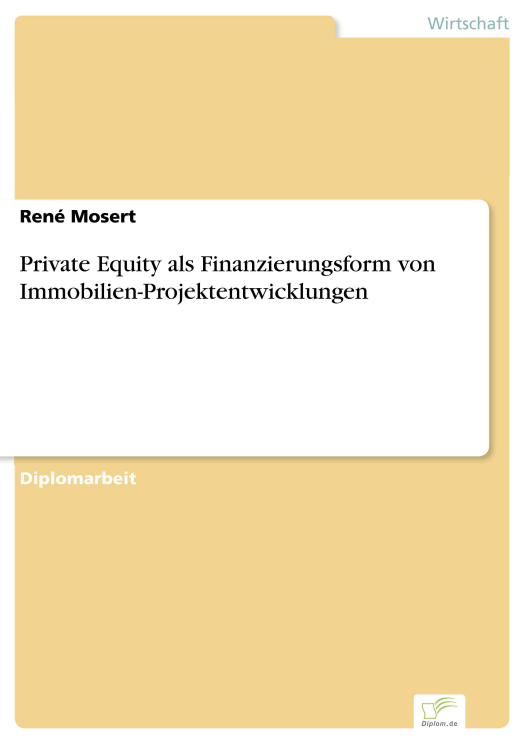
When a financing model gains academic relevance
The REEP concept was not only developed as a real estate and investment structure, but was subsequently also analyzed and described within the framework of an academic study.
REEP as the Solution
REEP: The Strength of Bundling
The name REEP creates a symbolic bridge between the historic ropes of the Hamburg harbor and modern real estate investment structures.
Just as a heavy-duty rope derives its strength from the interweaving of many individual fibers, REEP AG – Real Estate Equity Partnership – bundled the capital of multiple investors to enable the realization of larger real estate developments.
The name REEP was created by BAMAT and registered as a trademark.
Three Companies – One Structured Real Estate Platform
From an originally planned fund initiative, BAMAT developed a three-part participation and governance structure for the Heinz Häusler Group: REEP, HLP and REAM.
The objective was to create an investment platform capable of holding high-quality core and value-added assets while simultaneously participating in the value creation generated through project development — with clear risk separation, investor governance and future exit optionality.
The REEP AG – Real Estate Equity Partners became the central investment and property holding vehicle. Core assets and value-added properties were consolidated within the structure, while governance mechanisms such as the Board of Directors, Executive Management, Board of Investment and Advisory Board established institutional-grade investor oversight.
HLP Development AG became the operational development platform responsible for opportunity investments and development projects. The structure linked REEP AG and the Häusler Group in a joint venture structure:
- 49% REEP AG
- 51% Häusler Group
This ensured that operational development expertise remained with the entrepreneurial side while investors could participate economically through REEP.
REAM AG – Real Estate Asset Management was established as the professional asset and portfolio managem ent entity. It assumed responsibility for portfolio management, reporting, investment and divestment proposals as well as ongoing administration according to defined investment strategies and governance procedures.
The result was no longer a mere property development initiative, but a fully investor-ready real estate platform with governance, controlling and performance logic.
Participation
1. REEP AG
Real Estate & Investment Holding Company

REEP AG was designed as the central real estate holding company of the structure. Its purpose was to consolidate core assets and value-added properties within a single institutional investment platform.
REEP AG was therefore not merely conceived as a passive capital pool. It became the visible investor platform of the entire model. Its role was to hold real estate assets, structure participations, provide governance and investor control, and prepare the foundation for a potential future capital markets or strategic exit scenario.
According to the original roadshow materials, REEP AG was established with an initial share capital of CHF 20 million. Based on internal project information, approximately CHF 22 million in equity capital was later raised in several tranches.
Combined with additional debt financing, this capital base enabled the realization of larger-scale real estate developments in the Zug region.
Development
HLP Development AG
Project Development Company

HLP Development AG was defined as the operational development vehicle within the structure.
This entity was responsible for opportunity investments and development-driven real estate projects. The Häusler Group contributed its decades of project development expertise and local market knowledge through this platform.
The participation structure was clearly defined:
- REEP AG: 49%
- Häusler Group: 51%
This ensured that entrepreneurial control and operational leadership remained with the developer side, while investors could participate economically in the value creation generated by development activities through REEP.
The structure solved a fundamental conflict of interest:
Investors wanted access to development returns. The developer wanted to retain control, speed and entrepreneurial flexibility. The structure successfully combined both objectives.
Asset Management
REAM AG
Real Estate Asset Management Company

REEP AG was complemented by REAM AG as the dedicated real estate asset management platform.
Its role was to provide professional portfolio and asset management services for the underlying real estate holdings. Responsibilities included in particular:
- Ongoing real estate asset management
- Investment and divestment recommendations
- Reporting to REEP AG
- Implementation of a defined investment strategy
- Alignment with formal governance and decision-making procedures
- Administration according to institutional real estate standards
- Performance calculations based on intrinsic asset value
- Management fees, infrastructure fees and performance fees according to the contractual structure
The asset management agreement developed by BAMAT included quarterly reporting obligations. The management fee structure was calculated on the basis of assets under management. In addition, a performance fee mechanism was implemented, applying only above a predefined performance threshold.
The result was a professional system combining administration, governance, transparency, remuneration and performance alignment.
Liquid from the Beginning
The development logic of the structure was illustrated using the following exemplary financial assumptions:
- Equity capital: CHF 100 million
- Debt financing: CHF 150 million
- Total project volume: CHF 250 million
- Targeted sales value: CHF 325 million
- Modeled project profit: approximately CHF 43.98 million over 12 months and approximately CHF 65.96 million over 18 months
- Profit allocation: 51% Häusler Group / 49% REEP
The message behind the structure was clear:
REEP was designed not only to provide investors with access to stabilized real estate assets, but also to the entrepreneurial value creation generated through project development — while maintaining a structured, controlled and risk-separated investment framework.
The Economic Integration
Turning Real Estate Assets into an Investor-Ready System
BAMAT’s work did not consist merely of designing a corporate structure. The decisive factor was the economic integration of all three layers of the platform.
The logic was structured as follows:
- REEP holds core and value-added real estate assets
- HLP Development executes development projects
- REEP participates economically in the value creation generated through development activities
- REAM manages the portfolio and provides reporting based on defined institutional standards
- Investors receive transparency, governance participation and a comprehensible return logic
- The developer retains operational leadership and entrepreneurial flexibility
The roadshow model differentiated between a pure core investment strategy and a combined core-plus-development scenario.
For the illustrated financial scenarios, the projected equity return was presented at approximately 10% plus upside potential. Depending on the investment profile, the modeled equity returns ranged from approximately 8% for core investments up to 17.5% for development-driven investments.
The Valuation System
Institutional Valuation Logic Instead of Gut Feeling
Another essential building block of the structure was the real estate valuation and investment decision model.
At that time, the BAMAT team included an expert who had contributed to the valuation system of SUVA. SUVA is among Switzerland’s significant institutional real estate investors. Its valuation methodology was therefore institutionally driven, data-based and substantially more sophisticated than conventional broker or developer calculations.
This institutional logic was transferred to the Häusler structure.
The objective was not to artificially inflate property values, but to make investments comparable, verifiable and decision-ready.
The objective was not to artificially inflate property values, but to make investments comparable, verifiable and decision-ready.
The evaluation criteria included, among others:
- Location quality
- Rental and cash flow stability
- Development potential
- Risk-return profile
- Debt financing capability
- Exit capability
- Sensitivity analyses
- Portfolio impact
- Development risk
- Value appreciation potential
As a result, a traditional developer portfolio was transformed into an investor-ready decision-making model.
For private investors, HNWIs and family offices, this represented a decisive difference. They were no longer investing merely into individual projects.
They were investing into a structured investment system.
Contract Management
Strategy, Fundraising Logic and Contract Architecture from a Single Source
BAMAT did not only develop the strategic concept and roadshow materials. The contractual management framework was also established as part of the mandate.
The draft agreements were prepared in a manner that allowed legal advisors to subsequently review and finalize them from a legal compliance perspective. However, the economic structure, governance logic, remuneration mechanisms, reporting framework and performance architecture were conceptually designed by BAMAT.
The contractual and structural package included in particular:
- Portfolio management agreement
- Asset management framework
- Governance and decision-making procedures
- Investment strategy
- Performance fee structure
- Reporting obligations
- Control and information rights
- Management and infrastructure compensation models
- Interface structure between REEP AG, REAM AG and the development entities
As a result, the investment story was not merely presented — it was operationalized contractually.
This represents a fundamental difference:
Many advisors deliver presentations. BAMAT developed a functioning transaction and participation system.
Execution and Capital Formation
The Structure Became Capital. Capital Became Projects.
The REEP concept was translated into institutional roadshow materials and presented to investors.
According to internal project information, approximately CHF 22 million in equity capital was raised in several tranches. Together with external debt financing, this equity base formed the foundation for larger real estate developments in the Zug region.
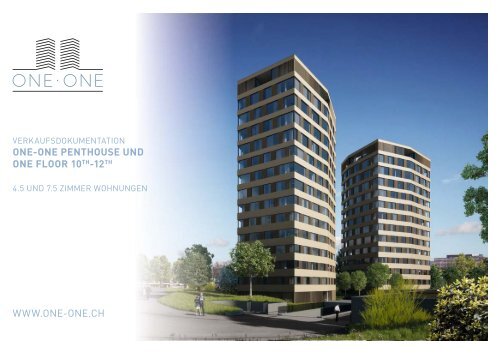
One visible example is the ONE-ONE project in Cham.
The ONE-ONE towers at Alpenblick in Cham are publicly described as a new-build project consisting of two high-rise towers with 71 condominiums, 13 and 14 floors respectively, developed according to Minergie standards. Public project references identify the development period as 2013–2016 and reference Heinz Häusler as part of the development environment. CSL Partner Architekten and other references identify Heinz Häusler Real Estate Investment AG and HLP Development AG as development entities.
For BAMAT, ONE-ONE is therefore not merely an attractive real estate development.
It is visible proof that structured capital architecture can evolve into real-world project development.
The Real Achievement
Not Finding Capital — Creating Capital Capability
The decisive aspect of this mandate was never whether investors could be found.
The decisive factor was that an investable structure first had to be created.
BAMAT’s contribution lay in the transformation:
- A conventional fund concept became an entrepreneurial real estate equity structure
- Individual projects became a capital-capable investment platform
- Developer know-how became a structured participation logic
- Real estate assets became an investor-ready, controllable and scalable system
This is precisely the difference between brokerage and investment advisory.
BAMAT did not sell real estate.
BAMAT structured a capital architecture that made real estate development financeable, governable and understandable for investors.
Let Us Discuss Your Structure
A real estate project, portfolio or corporate participation does not become investable simply because it is professionally presented.
It becomes investable when risk, governance, cash flow, valuation logic, control mechanisms and exit strategy are structurally aligned.
If you intend to make a project, development site, portfolio or complex real estate situation capital-capable, we should speak.
BAMAT Makes Projects Investable
The REEP case demonstrates what BAMAT delivers as an investment advisor and business developer:
We do not merely analyze markets.
We build structures.
We do not merely prepare presentations.
We develop investor-ready models.
We do not merely broker capital.
We create the conditions that make capital investable in the first place.
For developers, HNWIs, family offices and real estate owners, this is the decisive difference.
Because strong projects rarely fail due to lack of interest.
They fail due to lack of structure.